Showing posts with label personal growth. Show all posts

Tuesday, March 12, 2019

Mindfulness for Christians


The modern world ain't so good for your psyche. It's easy to get strung out, anxious as a wildebeast in a lion convention, with thoughts looping through your mind like a roller coaster.

Eastern religions have a bunch of techniques for developing peace of mind, colloquially referred to as "mindfulness". They generally involve directing your attention away from your thoughts and into something else, like your breath. This has useful side effects for defusing negative emotions like stress and training the purposeful direction of your attention.

Mindfulness has gone mainstream as a therapeutic and self-help practice in the West. The monks and yogis (and nuns and yoginis) of the East did these practices as preparation for contemplation of Ultimate Reality. Westerners use them to run a dual-income household under the demands of modern capitalism without drowning in a pool of tears. Either way, they do a lot of good.

So Christian and post-Christian society has looked to Buddhism and Hinduism for mental tools to cope with an often unpleasant reality. What is missed is that Christianity itself has a long tradition of similar mental tools for calming the mind and directing attention, that also help to grow in the Christian faith. It's overlooked because these techniques come from Eastern Christianity, which is unfamiliar in Western society. However, as far as I can tell there is no dogmatic incompatibility which would prevent a Western Protestant from using the mental tools of the Eastern Church.

The most powerful tool in the pocket of every Eastern Christian is known as "The Jesus Prayer". It has a few different forms, but I prefer the middle-length[0] form which is regularly spoken in church services:

"Lord Jesus Christ, have mercy on me".

This is used as a mantra, repeated over and over. It can be used in times of stress, to short-circuit anger or racing thoughts, or just when you feel bad and don't know what to pray. Like Buddhists, Eastern Christians identify uncontrolled thoughts and desires as a major source of unnecessary suffering, and they prescribe the Jesus Prayer as medicine.

It's a simple practice, but the history and use of it runs deep. Its earliest recorded origin dates to the 5th century founders of Christian monasticism in the Sinai desert. The Jesus Prayer is the monastic's single most powerful tool in his or her quest to dwell in God. In the beginning stages, it clears the mind and the heart of passions and focuses the attention. There are also further stages that monks write about that are hard for me to comprehend. Eventually, monks seek to have this prayer constantly running in their hearts under its own power, every second of their lives[1].

Christian monks and nuns use the Jesus Prayer for contemplation of Ultimate Reality. But lay people use it for every circumstance, which includes running a dual-income household under the demands of modern capitalism without drowning in a pool of tears. The Jesus Prayer is their constant companion in traffic, at work, and when relating to others.

I once dated a girl that was a Buddhist. She carried around prayer beads and used them to count mantras. She liked to recite them silently to herself when sitting on a bus or a train as a substitute for checking social media on her phone. She found it left her in a better mood. Similarly, Eastern Christians often carry around prayer ropes and use them to recite the Jesus Prayer. They are a wonderful replacement for checking Twitter or Instagram.


If you're a Protestant Christian, you probably pray free-form prayers at specific times and when you feel you need it. But it is useful to have a little short invocation that you don't have to think about. The Jesus prayer teaches us to rely on Christ, and not on our own intellects. There is no demand on us to come up with the correct words, or to petition God in just the right way when we are distressed. Instead we just invoke the name of Christ, constantly, and trust in him. We run to him like little children and count on him to do what is right for us.

Elder Porphyrios of the Greek church says that it is not necessary for us to fight the darkness within us. Instead, we only need to open a little window to let the light in. The Jesus Prayer is that little window. The most tiny, minimal effort of turning towards God leaves us open to welcome his grace.

In this post I have drawn parallels between Eastern Christianity and other non-Christian religions. It would be irresponsible for me to not mention that elders in the Eastern church often resist this comparison[2]. In particular, they point out that Christian mental practices are relational tools for contemplation of an ultimate reality that is personal. In Buddhism ultimate reality is impersonal. So I hope I've done my duty by stating that caveat.

What unites the Christian and non-Christian takes on mindfulness is that they both encourage explicit awareness of our thoughts. Instead of identifying with our thoughts and thinking of them as what we are, we view the thoughts as something that happens. And that disidentification then allows us some amount of control to shape them and to improve our existence.

There are many more uses of the Jesus prayer, but this post is intended as an introduction. If you are a Christian looking for a more Christian practice of mindfulness, try incorporating this into your prayer life. You might start with saying it a fixed number of times in the morning and evening to get used to it. A prayer rope is useful, but not necessary. Try to focus on the meaning of the words - who Jesus Christ is, what it means to call him "Lord", and what his mercy looks like. Then you can take it out into the world and have Christ as your constant companion.

Brothers and sisters of all faiths, may we survive life in this hectic world together, with the help God's grace.

About me: I'm just a beginner, a catechumen in the Eastern Church. I'm pretty pumped about it at the moment, and I like to share things I like. Please forgive me if I unintentionally say anything that misleads or offends. 


[0] The shorter form is "Lord, have mercy" and the longer form is "Lord Jesus Christ, son of God, have mercy on me, a sinner".

[1] See this 60 minutes special on the monastics of Mt. Athos, the holiest site in Eastern Christianity. Be sure to watch part 2!

[2] See Father Sophrony's writings on the Jesus Prayer. He was once a serious Buddhist before coming back to Eastern Christianity.

Sunday, September 2, 2018

Four Things I Wish I Had Learned in School

When I was a kid I was good at school. That turned out to be way less important than I thought it would be. The basic school skills of memorization, arithmetic, and essay writing are fine things to develop. But this narrow range of training omitted many important skills that I would need in life. And worse, this curriculum left me squarely in middle of my comfort zone for 13 years, so I never had to develop the meta-skills of skill acquisition. I was cocky and complacent.

When I hit the adult world, the adult world hit back. I was terribly unprepared to navigate its complexity. I found myself needing to develop, on the fly, a different skill-set from the one I had been taught. I needed to work on sensing opportunities, communicating my desires, detecting and removing fantasy from my world-model, attention management, making friends, letting go of resentment, and effective problem selection.

11 years navigating the turbulent currents of independent adult life is long enough that I’ve started piecing together some of the skills I need to survive and thrive. Along the way, I’ve found some specific practices that make life easier and better. When I run into one of these, I have the thought “I wish someone told me about this earlier!”.

To save you from the same trouble, I’m going to tell you about them now.


1. Improv


Image result for impro book


Practicing improvisational acting puts you into relationship with your subconscious genius. Your conscious mind learns that there is another entity sharing the head, or many. You learn the subconscious self’s habits and desires, and you learn how to harness its creative power for your own purposes.

The tao of improv is the experience of effortless creativity. When you are in the flow, you surprise even yourself by saying and doing things you didn’t know you knew how to do.

The greater tao of improv is flowing with others, effortless creativity in community. You learn how to trust and give and receive.

Improv in front of an audience is terrifying. There is no way to completely prepare. You must learn to accept failure, and to focus on the process. Are you flowing, permeable yet present, receiving and giving? That’s the thing you can control. There is so much else that you can’t control, including the audience’s mood and reaction.

I started learning about improv from a book, Impro: Improvisation and the Art of the Theatre by Keith Johnstone. I found the writing provocative, and then I just had to try some of the exercises with my romantic partner at the time. It’s a great place to start.

I found that the skills of improv bled over into other areas of my life. Having had the experience of telling improv fictional stories, I found it much easier to present in front of an audience for business reasons. I grew to trust in that my subconscious mind could come up with appropriate words for the situation, as long as I know the material.

I also have the confidence that I can teach anything I know. Lecturing is not so different from telling an improv story, and add in some hands-on pedagogy and you have an effective workshop.

Improv is a fantastic personal growth practice. But it is also very fun and worth doing for its own sake. One of my catchphrases is, “Improv is the most fun you can legally have as an adult”.


2. Power Lifting


There’s a motivational poster on the wall of my lifting gym that says, “the old that is strong does not whither”. That’s what I want for myself. As I’ve gotten older, I find myself plagued by little injuries here and there. Had I been stronger, some of those injuries could have been prevented. And I believe that getting stronger now will help prevent injuries in the future.

When I’m 80, I want to be like those old guys on youtube with the coke-bottle glasses that can still deadlift and squat a few hundred pounds. I want to bench-press my grandkids.

Lifting heavy things improperly is a major cause of injuries in life and at work. Powerlifting not only strengthens your muscles, joints, tendons, and bones, but will teach you the theory and practice of how to lift things without injury.

Now, powerlifting can also cause injury, especially if you dive in recklessly without proper training and theory. I’m paying for supervised small-group classes where a coach watches me lift and corrects my form. Not everybody has that available.

Starting Strength is a classic manual for getting started on strength training. If you start with that book and a buddy and post videos of your lifts to reddit for form review, that’s a way to get started on a budget.

Lifting makes me feel great. It feels good to be strong. It must generate endorphins or something. It takes away stress and brightens my mood. As someone who tends towards depression, that’s very important that I stay physically active.

I started powerlifting because I hoped that deadlifts would rehab a lower back injury that is keeping me out of Jiu Jitsu class. As I’ve done it, I’ve fallen in love with lifting for its own sake. I fantasize about my next lifting day. And when I get back to Jiu Jitsu, not only will it keep my back safe, but I’m going to be a stronger and more dangerous competitor.

Finally, the constant feeling of progress that lifting provides is a good backbone to my life. It is gamified by default, and there’s nothing like hitting new personal best lifts and new milestones. If I’m struggling in other parts of my life, seeing the weights move up give me comfort and motivation.


3. Authentic Relating/ Intentional Relating
Image result for authentic relating

Probably the single area where my life is going the best is in relationship. I am rich in friendship and connection.

This hasn’t always been the case. I used to struggle to connect to people. I grew up socially isolated and I was a stereotypical nerd.

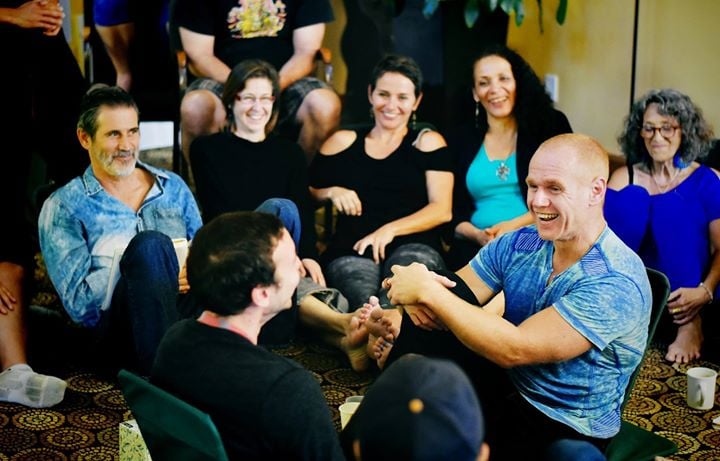
I credit the practice of intentional relating with the biggest piece of that change. Intentional or authentic relating is an umbrella term that encompasses a family of practices including eye contact, asking deepening questions, noticing and communicating emotions, and reciprocal vulnerability.

Intentional relating is mindfulness applied to relationship. It creates a safe container to practice talking about real emotion that might normally feel too embarrassing. It also provides a great container for practicing healthy conflict.

The main effects this practice has had on me less is to make me less afraid of people and make me like other people more. It’s hard to overstate how important that is. It’s qualitatively changed my experience of life. I get what I want more than I used to. I turned from an introvert to an extrovert. My social life is great. Because I like people more, I like myself more.

The world is full of people, so the more comfortable you are with people the better your life will be. For a long time, I didn’t realize this was a thing I could practice and learn.

Here’s a list of relating methodologies I have practiced. Some of these might be more accessible to you where you live than others.

  • Intentional questions, such as the 36 questions to fall in love, or conversation card decks you can buy on Amazon
  • Circling is my current favorite thing. I practice with the Circling Institute which runs classes in the San Francisco Bay Area and Asheville, NC. There are other circling groups throughout the world with their own take on the practice.
  • T-Group is a practice made famous by the Stanford Business School. It involves sitting with a leaderless small group of people and experimenting with interacting with each other. Focused is kept on the present-moment emotions and desires of the participants. There’s often some conceptual curriculum before a session, such as Nonviolent Communication (NVC) which is a useful methodology for becoming mindful of your inner emotional landscape. There’s a group that meets in Berkeley that is NVC-heavy.
  • I took a year-long peer-counseling program heavily influenced by humanist psychology. Learning to hold space for others is a very good way to turbo-boost your EQ growth.
  • Compassion meditation or praying for people, depending on which spiritual tradition you prefer
  • There are a bunch of neat intentional relating games out there. Sometimes they go under the brand name of “Relating Games”.
  • The books “Nonviolent Communication” and “Radical Honesty” are good places to start if you don’t have access to training courses where you live. Practice some of the techniques with friends. Note: take Radical Honesty slowly. The book can push you to go too far, too fast.
I think everyone who works with people, which is almost everybody, would benefit tremendously from this curriculum. I wish hands-on training was available in more locations.

On a practical level, I’m available to lead intentional relating games and workshops for your group, and I can refer other people who can also do so.


4. Meditation
Image result for meditation

I almost didn’t include this on the list because of my perception that this piece of advice would be too popular. You’ve probably heard people telling you to meditate before. It can feel like a chore. And I am no expert meditator. There are many levels to it beyond where I’ve gone.

However, the exploration of meditation carries with it a philosophical payload that is invaluable. The most important for me is the difference between conception and perception. Concepts are the mental models of our mind. Perception is what comes in through the senses, what is actually happening.

The perceptual world is more peaceful and stable than our conceptual world. It is a haven. When my mind is turbulent and out of control, I can touch in with the world of my senses. My mind might be thinking something like “my life is over!”, but in the world of my senses the sun is shining, the wind is blowing, my breath is rising and falling. Much of the distress I experience is due to my mind ruminating over concepts and my perceived place in social hierarchies, and not due to my actual experience.

Once you’ve developed the meditative practice of mindfulness, of “seeing what is really there”, it can be applied to many different activities: art, dancing, relating. Mindfulness is like salt. It can season almost any dish.

Another thing that meditation gives me is awareness of my mental and emotional state. When I sit down to meditate, I can tell if I am agitated or calm, distracted or focused. I get used to noticing my mental state and I target calmer, more peaceful mental states as a life goal, like other people might target weight loss.

There are probably other reasons to meditate. As I said, I am no expert on the topic. But the habits of mind I have developed from the time I have spent meditating are invaluable.


Conclusion

If I take a moment to fantasize about going to school that includes improv, powerlifting, authentic relating, and meditation, that sounds awesome. I think younger me would have enjoyed that and been challenged by it. What about you? What practices have served you best to navigate life? What do you wish you had learned years ago? Leave a comment.


Monday, August 20, 2018

Surviving in the Alaskan Wilderness


“It is extremely challenging and some students WILL quit. Expect to suffer.”

The marketing materials appealed to me. At the time of signing up for the one-week survival course in January, I was in the early days of recovering from a crushing romantic breakup. I wanted to be lost, obliterated, remade. I wanted physical suffering, perhaps as some kind of penance, perhaps to take my mind off the spiritual pain. The survival course sounded perfect. I pulled out my credit card.

By the time the course actually rolled around in July, I was a different person. I had a new home and a new routine. My emotions had stabilized. But nevertheless, the Alaskan Field Course approached, a foreboding presence on my Google calendar. It was a wall or moat, dividing the calendar into distinct before times and after times. July Jacob had to find new motivations for following through on the commitment of January Jacob. I found four reasons for doing it:


(1) I wanted to test my will. Life is hard and I am soft. There seems to be a lot of obstacles between me and the life I want to live. I wanted a difficult experience that forced me to go beyond my previous limits, an experience that not everybody made it through. It functioned as a symbol to me that I would be able to conquer difficulties elsewhere. 

It's not quite that I want to be a hero. But I want to know that I'm capable of being a hero. I have this fantasy that if there were something difficult and important to do, that I would have the will power to step up and do it. But if my will is untested, it's just a fantasy. By doing hard things, I gain some confidence that I am the person I imagine myself to be. 


(2) I love comfort too much. On the big 5 personality model, I score above average in neuroticism, loosely defined as sensitivity to negative emotions. I like to have my home environment arranged to be comfortable and quiet and I feel distressed if I can’t accomplish that. I try to fight this. In the woods - starving, sleeping on leaves, being cold and wet when it rained, doing hard labor - I knew that comfort would not be an option. I would be forced to learn how to be comfortable with discomfort. I might still instinctively seek comfort, but I want to have the knowledge that I can handle discomfort when it is necessary. 


(3) I wanted to have the knowledge that I could survive wherever I was in the world. I wanted nature to seem less hostile and more like home. 


(4) In the intervening 7 months, I had told a lot of friends that I was going to do the course, so I didn’t want to look weak by backing out or quitting. This might have been a stronger motivation than I like.


The Alaskan Field Course involves surviving under instructor supervision for a week in the Alaskan wilderness with minimal equipment - just clothes, a canteen, backpack, knife, and a small length of cord. No sleeping bags, food, tents, or water purification tech. 

Both my January self and my July self got their desires met. I can’t remember ever suffering so much physically. I was starving and sleep deprived most of the time. Food is not a top 2 priority in a survival situation (#1 temperature control and #2 clean water), so we made do with a few hundred calories of foraged berries that were bitter and sour for the most part. And, lacking sleeping bags, we needed to tend a fire all night to prevent hypothermia which made for broken sleep through the mercifully short Alaskan nighttime. 


Work was the lifeline tethering me to sanity. On the second day in the field, our instructor showed us how to make the A-frame structures that are in my pictures. His method of motivational speaking involved a lot of dark humor. “Results are mandatory”, he reminded us. The pressure of needing to get my shelter raised and water-proofed lit a (figurative) fire under my ass. I haven’t worked that hard in a long time. I hustled for about 12 hours in the long Alaskan daylight to build my shelter, gathering sticks and moss and grass. I spent more hours on it in the following days, haunted by the nightmare of my hut leaking in the rain and being forced to spend a night doing survival calisthenics to ward off hypothermia. That was the miserable alternative available if shelter or fire failed and the weather took an unlucky turn. 

I kept surprisingly busy in the course. There always seemed to be something to do to mitigate risk or make ourselves more comfortable. I partnered up with another student to share a shelter. Once our shelter was established, we built another one for our firewood so we would have some dry wood if it rained. Gathering firewood was the single largest use of time. 

Two-a-day courses in survival skills kept our lives interesting and added an extra layer of difficulty. For example, on the day of building the shelters, we had a hands-on course in how to safely cross swift rivers. This resulted in all of our shoes being wet. Other days, we learned how to carry injured hikers, wrap a bandage, make birch-bark bowls to enhance the efficiency of foraging, use a compass for navigation, and to trap animals and fish. 

There was a lot of misery. My will was sapped early in the week from caffeine withdrawal and later in the week from starvation and an accumulation of small injuries. My body did bizarre things. At night, it would tingle all over. I think it was a response to the starvation. My guts felt things they had never felt before. 

But there was also much that was pleasant about the experience. As my eyes adapted to the work, I began to see the forest as a store of resources. I knew that tree had analgesic compounds in its bark, that tree had sap that was a great fire starter, these leafy plants were good to eat and had protein. I learned how to sleep on the ground and I learned that moss is nature’s upholstery. My hands developed comfort and intelligence with the knife. I was turning into a bit of a wood-elf. 

Other highlights of the trip included the Alaskan scenery. We were surrounded by gorgeous mountains and camped on the banks of a clear wide stream with jumping fish. The monkey parts of my brain loved living in scenery that normally I would politely admire from a respected distance. I loved climbing over and under logs, chopping branches, eating berries fresh off the vine, and sleeping on the ground. It was a physically stimulating sort of life. 

The fellowship with other students was pleasant. In rare moments of downtime, we would lounge about on the moss and drink some boiled nettles or chaga, discussing which McDonald's food we would consume when we returned to civilization. 


The pace of work slackened in the last few days. With the extra free time, our minds turned to fishing. A variety of methods were attempted to catch them: traps, baskets woven out of green sticks or roots, hand-fishing, spears, and makeshift fishing rods. Most of the methods caught at least one fish, but the fishing rod was the most successful. It was just a string baited with guts and tied around a stick. It worked surprisingly well. 

I was disappointed not to catch any fish myself, but I did manage to barter for a small trout. I spit roasted it over a campfire. It was deliciously warm and fatty. 

From one perspective, the Alaskan Field Course is a wonderfully ridiculous thing. I’m surprised that you can buy such a real and dangerous experience in this age of regulated capitalism. The safety net exists, but it’s minimal. The nearest road was a treacherous 9 mile hike away. And we took risks. 16 adults, some of them brand new to the outdoors, spent the week running around with knives, climbing logs, foraging, hunting, and bushwhacking. We were constantly one wrong step away from needing a helicopter evac, or else spending a grueling day carrying a peer to safety. I loved that nobody stopped us for our own safety. It felt like freedom. 

The week passed by in a blur. Much of the time I was just focused on surviving. As I returned to civilization, I was left with a ghost of the forest experience. The ubiquitous smoke of campfires haunted the corners of my vision for several days. Each itch I instinctively assumed to be the probing of a mosquito.

In the end, I found what I wanted in the Alaskan wilderness. I feel harder, tougher. I lost my addiction to caffeine and sleeping with ear plugs. I've never been backpacking, but it sounds easy to me now. You get to carry food with you! And a sleeping bag! Lots of things sound easier to me now. At least temporarily, the course lowered my expected level of comfort. I’m happy I did it. I survived. 

Friday, July 6, 2018

Getting over relationship FOMO

When I was younger, I didn’t know what I wanted in relationship. To be honest, I was driven by FOMO. There was this fantasy world in my mind full of perfect sex, perfect relationships, and perfect women. It was impossible to commit to the merely good when the perfect might pop up at any moment. My fear of missing out became manifest in dabbling with open relationships.

But I discovered that FOMO was the cause of missing out on some of the very best features of relationship: intimacy, closeness, and stability. You only get to have those qualities if you can go all-in on loving someone, without keeping one eye on the lookout for better opportunities

At 35 years of age, I know what I want in relationship. I know that I want emotional intimacy and a partner in life. I want to play long-term games with long-term people. And I know I want to be a father. My father is one of the people I love most in the world, despite his flaws. I want to live up to his example and surpass it where I can.

I practice by being a cat-father and an uncle. I like to think I’m pretty good at it. It feels good to live into my loving and nurturing side.

I’m ready to say “enough!” to that infinite adolescence that is the signature lifestyle of urban post-modern capitalism, to exit from the FOMO-contest, and to build something that lasts. I'm ready to let other people travel more than me, have more sex than me, go to better parties than me, make more money than me, be more successful than me, and have better Instagram photos than me. Because those sacrifices leave space for the life that I *really* want.

When my relationship ended last year, it was terribly painful. But its dissolution was the mirror by which I was able to see myself, to learn what was most valuable, and to see the mistakes I was making that got in the way. There is no pain quite like the pain of becoming aware of your own flaws, and the certain knowledge that you are what held you back from getting what you most want. It is an absolute horror, a consuming flame. The self-knowledge feels like a treasure whose great value is in proportion to that terrible pain.

That hardest of experiences changed me for the better. I like myself more. I find myself more emotionally awake, both to the joy and the pain of existence. I cry easily. Having suffered, I care about the suffering of others. Suffering can function as a call to empathy. It was a kick in the pants to finally get involved in the volunteer work I had always wanted to do, providing emotional support to people in their darkest hours.

I am hoping to continue to grow, and I'm hoping to find ways to grow that aren't quite so traumatic. I am not the person I was a year ago. The world looks different to me. I'm seeing it through a lens made of different concepts and experiences. I'm grateful for it.

Thursday, April 5, 2018

The Death of Interchange: A conservative critique of Radical Gurus


0. Introduction

If you haven’t heard, the Interchange Counseling Institute has imploded in a slow motion version of the classic guru-sex scandal. Operations have ceased and the incoming class of 2017/2018 has been cancelled. This a common way that guru-dominated organizations come to an end. I suggest anyone involved in building an organization for personal development familiarize themselves with some of the historical examples.

For most students at Interchange, including myself, the Interchange experience was an intensely positive one. But flaws in the edifice were obvious. Many of us saw the end coming, though I was surprised by how quickly it came.

While there is plenty of individual blame to be placed, particularly on Steve the guru/founder, I claim that Interchange was *institutionally* flawed by design. It was not built to last. There are specific flaws in its moral outlook, its curriculum, and its organizational structure that made it particularly likely to end in a mess of sexual impropriety and emotional pain. I present three criticisms:

  1. By overthrowing social rules, revolutionary/progressive movements can devolve into monkey status competitions that benefit the powerful and harm the vulnerable
  2. Deconstruction is a dangerous technique prone to abuse, and wisdom must be used when teaching it
  3. The male guru-led organization is dangerous for reasons of evolutionary psychology

As a brief aside, the criticisms I present come from an evolutionary/conservative point of view, nearly the opposite viewpoint of Interchange and its founder. I believe a diversity of viewpoints in a group is vital for purposes of self-criticism, course correction, and group longevity. This point is widely under-appreciated and seldom acted upon.


1. By overthrowing social rules, revolutionary/progressive movements can devolve into monkey status competitions that benefit the powerful and harm the vulnerable

The Interchange organization wasn’t just offering a counseling training program. It also sought to build a community of radical praxis, liberated from the rules of society. This included social rules about sex.

A person with a revolutionary mind judges existing social rules to be oppressive. You might expect me to disagree with them, as I sometimes claim the “conservative” label for myself. But I actually think their criticisms are correct.

Social rules *are* oppressive. All social structures are an evolved, negotiated compromise developed over time between sets of conflicting interests. They prevent some people from getting what they want or getting what is best for them. In exchange, these limits on individual behavior hopefully enable a society to achieve some larger social good.

Wisdom lies in finding good trade-offs between individual oppression and social good. Existing social structures should be challenged. We are free, each generation, to renegotiate them to better serve us.

Though it is tempting for revolutionaries to move as close as possible to total sexual freedom, throwing out all the sexual rules is a foolish move to make. Without rules, human society devolves into monkey-status games where social power reigns.

This total freedom benefits the powerful, who still pursue their self-interest, but now without the the rules that might serve as a check on their behavior. The powerless often suffer under existing social rules, but they suffer more without the rules’ protection. In the new order, “The strong do what they can and the weak suffer what they must”. Modern revolutionists are aware of abstract power differences between groups in society, but they are seldom hip to the concrete reality of individual power differences within their community.

Rules prevent abuse by the powerful. They are necessary for the long-term thriving of the community, especially rules governing sexual conduct. I’m not saying that a group needs to follow society's rules, though I encourage you to consider that they may contain more wisdom than you expect. Rather each group should develop their own. The rules can and should be renegotiated, but slowly and conservatively, and never on a case-by-case basis or in the heat of the moment.

The few rules that Interchange had about sex were wise, such as a ban on first-year students having sex with other students. But the rules weren’t taken very seriously. And ultimately it was the behavior of the leadership, not the students, which needed to be more carefully regulated.


2. Deconstruction is a dangerous technique prone to abuse, and wisdom must be used when teaching it

Interchange teaches deconstruction as a therapeutic technique. Some teaching is dangerous because it is wrong, but deconstruction is dangerous because it is true. Our social rules and concepts *are* arbitrary. And they could be different. But while deconstruction frees us from our limiting beliefs, it also frees us from our limiting morality, and that can be a problem.

Deconstruction is prone to abuse and manipulation. It brings our focus onto the present moment, where future consequences of our actions are discounted. After all, the future is an abstract idea that doesn’t really exist. This is a great formula for talking people into sex that they will later regret.

It’s also dangerous for people in existing relationships. The guru teaches you how to “end jealousy permanently”, then convinces you that relationships don’t really exist, and then he sleeps with your wife. Maybe in the midst of the spell of deconstruction everybody is on board and nobody feels guilty. But in the aftermath, hurt feelings and resentments grow, and resentment is the poison that will destroy a community.

Deconstruction is not just a potent tool for manipulating others. It can be a dangerous tool for manipulating ourselves. Once internalized, deconstruction can be used to excuse any bad behavior and keep a clear conscience. What’s “bad behavior” mean, anyway? If there existed a guidebook for training oneself into becoming a sociopath, deconstruction would be a prominent technique within it.

Deconstruction requires wisdom to wield properly, a wisdom that Steve lacked and so could not teach.

I’m currently reading a lot by David Chapman, Robert Kegan, and Jordan Peterson, all of whom talk about the danger and promise inherent in deconstruction, either from a Buddhist or postmodern perspective. Chapman, summarizing Kegan, is a particularly important read.

Kegan sees deconstruction as acid dissolving and undermining the social rules of modernity. If used poorly, we sink back into monkey status games. If used wisely, we use our newfound freedom to mold the rules to better suit us. Building good societies in the presence of the knowledge of deconstruction is an unsolved problem [1]. According to Kegan, it’s the most important challenge of our times.

My best guess at a rule for using deconstruction wisely is "keep an eye on the long game". You can live perfectly well with either the belief that relationships do or don't "really" exist. But where do those beliefs lead you in 5, 10, or 20 years?

In some Buddhist monasteries they also teach dangerous-but-useful mental techniques, some of which are very similar to deconstruction. But these techniques are taught to students who follow a strict moral code in order to minimize the danger of teaching them. The students also have a close relationship with a mentor, who might decide that they are not ready for a particular set of practices.


3. The male guru-led organization is dangerous for reasons of evolutionary psychology

I leave this part for last because I am least confident in it. I haven’t read much on evolutionary psychology, and I’m working on concepts I’ve picked up second-hand from bloggers and friends.

Guru-led organizations are especially dangerous when they’re headed by men. As men get turned on by youth, clear skin and feminine body proportions, women are more attracted to men at the top of a status hierarchy. A man at the center of attention will find that he has far more sex appeal than he is used to. This is similar to what happens to successful rock stars.

But a guru is not a rock star, in that the guru has a responsibility to the spiritual growth of his students and his community. A guru that uses his position to maximize his sexual conquests is demonstrating short-sighted, adolescent behavior and he will likely fail to fulfill the trust placed in him by his students. Within a small amount of time, sleeping with students and sleeping with women in committed relationships causes the growth of resentment that blows up the community.

There is a second, darker power that the guru gains on top of the status hierarchy. Women he comes on to may feel pressured to say yes to his advances for fear of causing conflict or risking their status within the community. The power differential between guru and student has a coercive flavor, and it increases the odds that the student will acquiesce to sex that she will later regret.

Sexual dynamics between leaders and followers are especially dangerous in spiritual/personal growth organizations where the guru will have access to students in an emotionally vulnerable state, sometimes literally out of their minds. The founders of the Christian church recognized this risk 2,000 years ago, which is why they instituted conservative sexual norms for leaders. In the Bible we find the Apostle Paul exhorting early Christian church leaders to be sober, monogamous married men. This safeguard hasn't always worked, but it shows that organizations have struggled with this problem for a long time.

Sexual liberation + male leadership is a dangerous mix everywhere, and not just in spirituality. It’s the formula at the root of the tech VC sexual harassment scandals that hit the news lately. Being a successful leader requires sacrifice of some sexual freedom for the good of the group.

In addition to the dangers of male gurus and sex, the guru-led model is fragile because the health and reputation of the group depends on the personal morality of one imperfect individual. For any institution to outlive its founder, new leaders must be trained up and power must be shared with them. Sharing the limelight requires some humility and far-sightedness on the guru's part. Interchange did some of this, but it was still probably too guru-dominated to survive Steve's departure.


4. Conclusion 

I’ve said a lot of good things about Interchange over the years. I still mean them. Interchange permanently increased my EQ and lowered my anxiety around other people. And it made me a better counselor. These are powerful, life-altering results. I owe personal gratitude to everyone who built Interchange, especially Steve.

But I’ve also encouraged lots of people to join. I regret that I didn’t more loudly voice my discomfort with the program along with my praise of it. While I was confident in my own abilities to weather the shitty parts of Interchange, I should have recognized that as a man I was in much less danger than a woman would be.

I want to live in a world where people more deeply encounter each other, where we live with an awareness of our shared humanity, and where we let go of unnecessary fear. I want there to exist training programs where people can boost their social skills through practice. I want there to be safe spaces to learn how to navigate edgy, intense, and potentially dangerous emotions. Interchange was a unique example of this.

I hope the good parts of Interchange can be separated from the short-sightedness and immaturity that Steve brought to the program. The fact that rest of the leadership team was empowered and confident enough to speak up and put a stop to the program speaks well of them and of the training they received. I believe that Steve genuinely cared about empowering people and he was successful in doing so. In some other organizations suffering from sexual impropriety, the violations continued for decades.

As Steve was the student of earlier programs of study, I hope the students of Interchange bring the next evolution of human emotional development into the world.


[1] Kegan has a numbered system of 5 stages of identity formation where each is an improvement on the last. These can be applied to individuals or societies. In part, they go:

(3) unstructured -> (4) structured -> (5) flexibly structured

Deconstruction helps us get from (4) to (5). But if we haven't fully mastered stage 4, deconstruction can cause us to fall back to stage 3. It can be really hard to tell the difference between (3) and (5).


Thursday, October 6, 2016

My Interchange Journey

Like a lot of people I know, I used to be afraid of experiencing other people’s emotions. At restaurants, I said my food was good when it wasn’t so that the staff wouldn’t experience anger or shame. I avoided talking about problems in my relationship with my girlfriend because who knows what box of emotions that would unleash. If I saw someone in visible distress, I avoided them. I figured it was someone else’s responsibility to help them. What could I do?

That changed drastically over the last 12 months. I am a hundred times more free in expressing my thoughts and feelings in all sorts of situations. Whatever outcome I feared would happen doesn’t happen. Most of the time kindly expressing my opinions makes my relationships more real and satisfying. 

Ignoring emotions didn’t make them go away. I used to have this voice in my head ruminating on all the things I wished I had said but didn’t. But when I speak up, I find that inner neurotic voice is silenced. In some circles, they call this achievement “inner peace”. The trade-off is that I live a more vulnerable life because people know what I really think. It's a worthwhile trade. 

Another big change for me is that I go towards people in distress instead of away from them. I think I’m a pretty good person to have around when you need somebody. This change in my self-concept still feels new to me and I'm proud of it. 

I trace these changes back to the year-long counseling training I went through at Interchange. I learned from some other places too[0], but Interchange was the biggest piece. It bills itself as a counseling and personal growth program. But what I learned about was how to be a human. I learned how to let people see my emotions and how to be with other people’s emotions. My EQ went through the roof.

It turns out to be easy to be useful to people in distress - acknowledge what they’re going through and don’t try to fix them! Americans need to be trained out of fixing people and denying negative emotions. You have to be able to tolerate what’s there instead of pasting happy faces all over everything. The first counseling practice at Interchange is literally sitting in attentive silence while the client tells you about their problem for a few minutes. If you can do this successfully then you are in the 90th percentile of the population in terms of counseling.

Me and Steve at Interchange, demonstrating an exercise designed to examine our anger through simulated road rage

The most valuable thing about Interchange is that it provides a safe container for people to practice being real with each other. During the training, I spent hundreds of hours having real interactions with people. We helped each other explore our inner emotional landscape. They cried. I cried. It was intense, magical, and cathartic. 

On a larger scale, I think all people need safe spaces to be real with each other. We have a massive deficit of it in our society - it’s emotional malnourishment. Most of us hide what we’re feeling from our friends and family, some of us hide our emotions from our fucking therapists. 

Our culture still suffers from the idea that therapy is something you do when there is something wrong with you. You are broken and need to be fixed. For a lot of us, the only time we open up to anybody is when something is terribly wrong. It’s the same way we mistreat our bodies by only caring about health when we get sick. 

Humans are not machines that sometimes break and need a mechanic. Humans are organic creatures that are constantly growing and changing. If you’re going to use a metaphor, use a plant. It constantly needs a certain amount of water and nutrition and if it gets what it needs it grows. We need some amount of constant emotional nourishment to stay healthy.  

Modern life is confusing. Things have changed so fast. We’re not built for it. The institutions that people relied on for emotional nourishment for centuries are disappearing or changing. And maybe they were never very good to start with. We need to help each other feel like we aren’t alone and have a home in this world. 

I feel uncomfortable giving a full-throated endorsement of something, even Interchange. It's the best program I've ever done but it isn't perfect. So I want to end with some criticism to provide you with a balanced cross-section of my judgements of it. 

Interchange is based on an optimistic humanism that comes from people like Carl Rogers and Harvey Jackins. In the program you practice believing that other people are fundamentally good, interesting, and capable. It’s a powerful counseling stance. But sometimes it sounds naive and it might not be the right approach for a counselor working with a smart, skeptical client. 

I worry about groupthink at Interchange. There isn’t much nuance in what is taught and there aren’t many skeptical voices. This is partly because a community based on this kind of Humanism feels so nice to be in. When I brought up a skeptical point of view, I was the one harshing the good vibes.

Also, most of the students came from similar ideological places. I grew up in a cult so I feel uncomfortable being around unanimous ideological agreement. But when I expressed this discomfort, other students reached out to me and didn’t push me away. There may not be a lot of critical discussion but it feels like Interchange can handle it when it does happen.

Interchange is a great place to practice emotional intelligence and learn counseling. It is not a complete source of all the spiritual nourishment that you need to grow as a human. In particular, between the humanism and the social justice, it’s an epistemically sloppy place. Truth is not highly valued besides the supposed "truths" taught by humanism and social justice. If there were a package deal with Interchange and CFAR training together, that would balance out Interchange with the values that are missing.

Being founded by a progressive teacher named Steve Bearman, Interchange promotes some ideas from the social justice movement which are divisive and, in my opinion, poorly supported[1]. It's a harsh note mixed in with the humanism. White men were unkindly singled out and stereotyped a few times. Marxist models of the world are presented without consideration of other points of view that better map to reality. I spent a few nights lying awake and composing angry messages to the Facebook group. Gradually, I built more social and emotional resources and it bothered me less.

Most of the time when social justice and humanism conflict at Interchange, the humanism wins. For example, during exercises where we were instructed to practice radical honesty with each other, one of the more radical progressive students inevitably objected to the exercise on the grounds that people who aren't white men might be exposed to "oppressive" opinions. In response, Steve gently expressed that he had faith that the students could handle it. Learning goals were valued ahead of progressive orthodoxy.

Between the bitter taste of righteous anger in social justice and the sweetness in humanism, the sweetness wins out by something like a 9 to 1 ratio. Interchange is a personal project of Steve's and this reflects his background and values. You can't really change Interchange without changing Steve, and Steve's been into social justice for 2 or 3 decades. I've made my peace with it and I highly value my experience and expect to learn more from Interchange. 

Despite these caveats, I found Interchange to be a brilliant, daring, creative program. It catalyzed an incredible year for me. I believe in myself and I believe in my capacity to grow and change for the better. Check it out, or something like it. In terms of happiness, investing in your emotional intelligence is the highest-yield investment you can make.


[0] Stanford Business School's "touchy-feely" class, Nonviolent Communication, Buddhism, and eXperience the Game were other resources that led me down this path.

[1] For example, Steve often uses the concepts of class conflict, oppression, and privilege to model how the world works. These are a staple of the social justice/progressive worldview, but I think they are simplistic and overused.

Friday, July 29, 2016

"Too Far"

A common obstacle in personal growth work is the fear of going too far.

For example, I recently attended a retreat to learn how to be more open to connection with other human beings. I had an impulse to hold back. I thought, what if I’m 100% open to everybody? I live in a crowded city full of human suffering. My life would become unlivable if I stopped to take in the humanity of each person that I passed. I would have to become like Jesus or something.

I see the same type of worry about “going all the way” among the participants in a workshop I teach based on the book Radical Honesty. Wouldn’t it be hard to live 100% honest all the time?

As we stretch into new ways of being, the fear of going too far is mostly unfounded. Naturally, I’m about 5% open. Most people are probably ~10% honest (I’m just a little bit more, and I practice it). The chances are tiny that any person will achieve 100% openness or honesty even for a second.

The purpose of personal growth activities is to give ourselves more options for how we relate to the world - more tools in the tool kit. It takes purposeful effort to hold ourselves in the new practice for the hours or days that a workshop lasts. At the end, we naturally return to our old ways of being. Our default patterns of behavior have momentum.

If all goes well, your growth process will look something like this:
So don’t sabotage your learning by holding back. Commit to the practice for a set period of time and play hard. Commitment is an important meta-skill in personal growth.

At the retreat I attended, commitment worked well for me. I went into it knowing that I had some philosophical differences with the leader. But rather than spend the week in philosophical debate I made a commitment to fully engage with the teachings. I’d try it on and see what was good about it.

I caught myself in a cynical mindset holding back from the practice about once every two days. But my commitment to fully engage helped me become mindful of my internal state and dive back into the practice.

The result was that I achieved a new state of openness and empathy that feels good to inhabit. I'm a low-empathy, "tough", independent male who has been shaped that way by circumstances. Practicing empathy is good for me - it corrects my natural imbalances. Having the memory of this new empathic state, I have the option of choosing more empathy in other parts of my life. And I’m still comfortably far from Jesus levels of empathy.